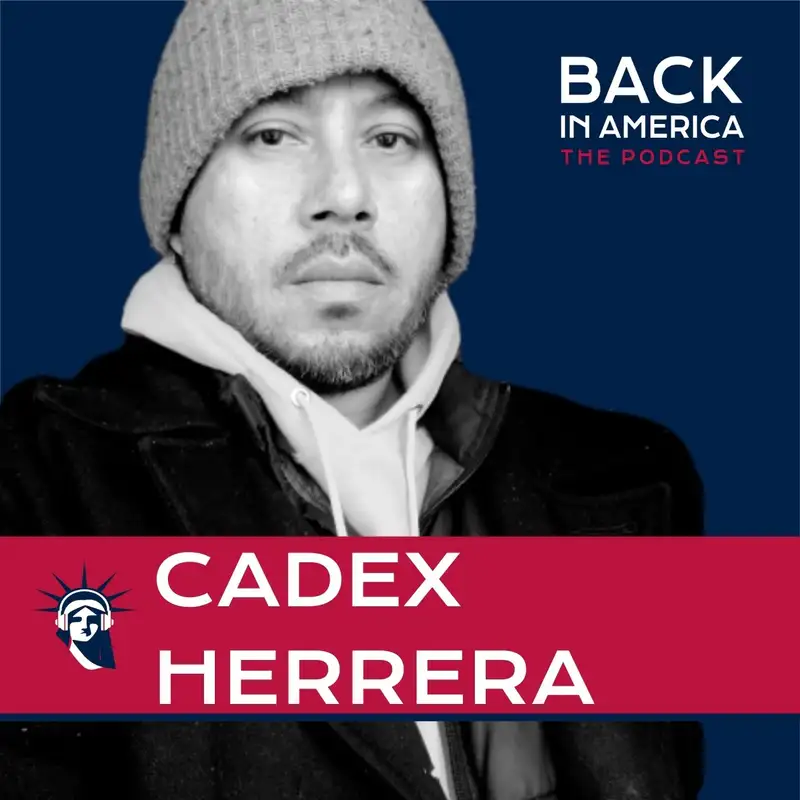
Part 1/2 - Cadex Herrera Lead Artist of George Floyd's Mural
If you're tired of arguing with strangers on the internet, try talking with one of them in real life.
Welcome to Back in America, the podcast.
This is part one of two episodes dedicated to the George Floyd mural. If you want to see a picture of the mural, go to the podcast website at backinamericathepodcast.com.
I am Stan Bertolow and this is Back in America. The death of George Floyd, a black man killed by a Minneapolis police officer, has triggered protests against police brutality, police racism, and lack of police accountability. Three days after Floyd's death, a group of artists painted a mural on the Copfoot building at the corner where George Floyd was killed on May 25th. The artists started at about 7 a.m. on May 28th and finished the mural at 5.30 p.m. the same day. Most of us have seen the image of the mural since almost every American TV station live-streamed the George Floyd funeral whose backdrop was a digital version of this mural. Inspired by this work, artists across the globe started producing similar tribute to George Floyd
and a digital database of such art has gathered a repository of 1,324 pieces of art so far. My guest today is one of the leading artists behind this iconic mural of George Floyd, a man who immigrated to the United States from Belize when he was 19. Today, at 45, he works as an elementary school behavioral specialist and social justice art is his passion. Welcome to Back in America, Caddx Herrera. Thank you very much Stan, thank you for having me. Caddx, this mural that you produced with two other artists, Xena Goldman and Greta MacLinn is your first mural. Tell me what went through your head when you got a call from Xena Goldman asking you to work on the mural. When did she call you? How much time did you
have to prepare this work? Xena Goldman had called me on Wednesday night. I had returned from joining the demonstrations on Wednesday evening. On Tuesday night when the news started coming out and we all saw the length of the video that went viral, I went to downtown Minneapolis, that was Tuesday night, to take some photography. I'm a photographer as well and when I saw the movement, when I saw the people there, I put my camera down and decided to be a participant rather than an observer. I decided not to take any photographs and just joined the demonstrators that were there and I just wanted to be a part of that. On Wednesday, I went back out again and when I came back, I saw that I had a message from Xena and she just posed one question to me, which was
do you want to paint the mural? I just said yes. I knew exactly where she was coming from. Then she said, you know, I have a portrait here that I'm going to use and I would like to see if you'd be interested in painting this mural with me and she asked me to design something for it and I said of course. I got on it right away. I made a really quick sketch. It took me three minutes and I sent it to her and she looked at it and she saw it and she understood the idea right away and what I was trying to convey and she's like yes, this is it. This is perfect. This will work and then I said wait a few more minutes. Let me send you something more detailed, a little bit more elaborate. About half an hour later, I texted her back with another picture of the sketch
of the actual realized idea that's now on the mural and she said yeah, that's perfect. Let's do it. Let's meet tomorrow morning, which was a Thursday at seven o'clock and I said I'm there and once we got there, you know, that's when I first met Greta. I did know her work as a muralist in the Twin Cities. Amazing work, just a fantastic artist. We decided okay, you know, this is the place where it happened and Zina earlier asked different folks in the community if, you know, where would it be appropriate to put a mural up on and, you know, everyone she asked said it should go on the building. It should go on the building and so we looked at it and it was a billboard of advertisement for produce and farm goods. I remember, right, it was this very
folk drawing of a painting of a barn and a field, very elementarily done and I believe a box of milk or something like that. So we looked at each other and said all right, let's get to work. You know, Greta brought out the primer and we painted it. We painted over it right away and then we started realizing the sketch on the wall. So two questions. Was it commissioned? How did that happen? How did, you know, did you get an agreement from the store to paint on it? Was it commissioned by the city? No, no, it was not commissioned. This was a, it was a call to action. It was an immediate and spontaneous effort by Zina and I and Greta and then also the other folks who came and joined us through the process. Typically, you know, if you're going to paint a
mural, you would go out to the community and get consensus and work with the community, apply for a grant, try to find a wall for permission and then wait for that permission to be granted and it's not guaranteed if you're going to get it or not. So this is not what we were doing. This wasn't a grant-based mural and no, we did not ask permission from the owner of the building. We saw the wall and we never even thought about or considered the owners, whoever owned the building's feelings, you know, that wasn't part of our, at least of my process through this.
And so you spoke about it briefly, but how does the creative process work when you are in a group of artists who decide I'm going to do the portrait, I'm going to do the background, you know, what happened? How does that work? The original sketch that I created, the one that we worked off of for the mural was fully realized. So the letter forms, they were the way they were. The only thing that was not in the sketch that I brought, I believe, was a realized portrait because Zina was taking care of that part. When I showed them the sketch, you know, we talked about the color choices and initially it was going to be a black background rather than the blue background. I started explaining to the three artists that we needed to be very conscious of about the color
use because it's also as symbolic as all of the different elements in the piece. You know, I explained why it was important to use a brighter color, like for example, the sky blue that we use and the yellows and the blacks and I didn't have as much input on the way the portrait was treated. Zina has a very specific and peculiar and beautiful style of the way she applies paints so we are full of trust in her process. The consistency came from the explanation of what those colors meant and why they should be the way they came out being. And if people are not familiar with the painting, could you take a minute to describe what it looks like? Sure, this whole piece was painted freehand and we didn't consider the dimensions. All I knew
for the design is that it was rectangular. The whole piece is laid on top of a sky blue background that spreads from a light blue center to a dark blue outer and then on top of that is a sunflower with a very large black seed pod. That's where we have the names of other black Americans who have been killed by police. At the top of that flower is the word say our names
in reference to the Black Lives Matter movement and also to honor and remember those who have been killed by police and inside where the seeds are supposed to be are names, are their actual names. On top of that is George Floyd treated in a very bold manner. It has a outline of purples and that sort of blends into that sky blue and the inside of it is yellow. Part of that yellow, some folks have asked me why we use that yellow. The Black Lives Matter movement has a color scheme and a lot of their material that is sent out and it's sort of a little bit of I think their signature color and it's yellow and black. That yellow was important to add there as a symbolic gesture to the cause. Inside the name are sort of abstract very simply drawn human forms
raising their fist and that represents the community and sort of the tones of the sky is coming through them as they're raising their fist inside the letter forms. At the foreground is the portrait of George Floyd and then in front of that is the word I can breathe now. Right before we completed the mural, Xena went out in the community and the folks that were watching us through the process and through the day and who also helped you know what would be the most appropriate thing to put there. We didn't want to put words in George Floyd's mouth either and so the consensus was from the people that were gathered there that I can breathe now was the most appropriate thing to put there and so we asked a young man who was there if he would
do us the honor of actually writing it. So none of the artists who were part of it actually wrote that last statement. Now I would like you to help me understand and visualize you know if you close your eyes and revisit that time on the day you did the painting how was it? I mean it must have been quite hectic right? It was all over the news that video went viral and you were there painting what has become a symbol of the movement. How was it during the day? You know were you looking at each other? Were you speaking with each other? Were people talking to you? Yes all those things. Personally it was an incredibly surreal experience that had all of the emotions built into them and all the unexpected things. We started at seven o'clock in the morning again
just an adrenaline alone you know we wanted to get this done and one thing that we knew was that we had to get it completed that day. It needed to be finished that day. When we first got there, there was already people gathering around but the memorial was starting to form. There was a lot of nerves, anxiety about you know how it was going to turn out. An incredibly hot day as the an hour into it you know people that were walking by came and asked us what are you doing? You know what's going on here? We explained to folks as like oh we're creating a memorial for George Floyd here. A mural this is and I would show them the sketch and they right away they would get it you know and their eyes would sort of light up and they would go oh my god this is amazing and all this
thank you. We started proceeding through the day at 10 o'clock there's a lot more people coming together. There was a film crew on the street corner that was watching us work and I only was aware of them when they came towards us and asked us to do an interview and then people started gathering and asking questions and they would ask questions and we would stop and say yeah this is what we're doing this is what it means and I remember there was this just beautiful grandmother who came at about eight o'clock that morning and she was one of the first people to ask us what we were doing and she was so touched and so grateful and her spirit really gave me a lot of energy you know it just that idea of like keep going I support you in this
and she would leave and then she would come back and she did that throughout the day and towards the later afternoon she brought her grandchild and she asked us if we would let her grandchild you know paint on it and we said of course so we gave the young person a brush and they got on the you know and throughout the day people from the community would come and ask us if they could paint and we're like yes you know here's a brush paint this part paint that part work on this you know and and they were sometimes very shy they just wanted to add a touch here or there at about 11 or so in the morning Al Sharpton came to speak he is a minister and part of the civil rights movement very incredibly moving speech you know and that again was just giving
me more energy and folks were coming do you guys need water do you need food what do you need you know an incredibly moving part for me because again we're just it's just adrenaline driven we're working as a team is very fluid it was like we've worked for you know 20 years together we all understood what our roles were we were we were editing and taking stuff off and working on the color and taking things on and so it was very very fluid and we all sort of understood that there was a bigger picture you know not to pun intended I guess it wasn't about us individually necessarily but it was about this thing that we had created and now we wanted to complete I was very involved in this and just totally focused and like you know trying to absorb all of that energy that was coming
and I saw the Reverend Jesse Jackson another civil rights leader walk behind us and he stopped you know for a brief moment and he looked at us working and I wanted to say hello to him you know he's been a hero of mine and then he went to the corner where he was going to speak to a group of people I went over to the corner where Jesse Jackson was speaking and he was incredibly moving and he did this call and response you know with the crowd and I was so pumped up you know my heart was just full of emotion and and sort of sadness but also it was it was it was filled with this sense of of hope you know that there's this change happening and so I after he was done I went back and you know the rest of the day was just sort of that energy blur until it was all of a sudden
we're done with him we're stepping back and we're going wow you know here it is let's move forward in time now three months later your work is one of the most recognizable image that have come out of the protest raging around the world you've been interviewed as you said countless time what do you make of all that you know looking back at what happened three months ago and and where I took you now what what lessons have you learned going into this creating this mural
never did across my mind that it would be that we would get the response that this mural received um I was honestly again acting upon you know action um uh acting on trying to show my support for the movement and as an art activist you know this is a lot of my work is like speaking about these things and bringing awareness I honestly thought it was going to be just locally you know that it was something that we were doing for that community that was for us as artists to show that specific community that we supported them that we loved them that we cared that we cared for George Floyd and what happened to him should never ever happen to anyone again the response of of the greater community of of Minnesota and then the world was totally I
I did not see that coming I did not expect it and it was overwhelming however I I never let it get to my head because I always kept this in in sort of my general thinking was that none of this is about me you know therefore I did not let that sort of change my my my patterns and and sort of my daily communications with people my daily work that I have to do it was something else that was happening separate from who I am as a person and as an artist and when whenever that was happening you know then I took care of it but then I moved right away to something else I work and as a behavioral specialist and one of the things that we're trained to do because we work with students with behavioral issues and a lot of things that happen in their lives and sometimes
they can get really personal and really try to hurt your feelings or hurt you physically as a person who has to work with that every day you have to always remember that you have to leave that at the door so I I use that training to sort of compartmentalize everything that was happening so that is happening on the side and I you know I try my best to take care of it and balance it but at the same time I have a family I have a profession and I have my my social work that I have to do so did the sort of the fame that you got through this mall did that help with your your heart and your social media presence and yes yeah absolutely it did it was you know overwhelming all the other people and that reach out to me thanking me and
offering me you know jobs and offering to pay me for prints of the mural and all of these things and the group and decided from from as soon as we were done with that mural that we were not going to commercialize or profit from it and so we have not and we have kept through to that and you know that I'm really proud of that fact but yes you know it's definitely given me exposure and which I'm thankful for and it's also given exposure to my work which is to me the most important thing you know is bringing awareness to the social injustices that are happening not only in this country but but around as well as environmental injustices and I I read of a of a controversy that that came up after you painted this mural and I'm going to quote here
Keno Ivor the executive director of Black Table Art said that the mural was created not by black folks and without the process of engaging with black people and indeed you are from belize in central america and the two other artists are white american can you speak about that you know you you are your work is is a portrait of a black experience uh isn't it a bit ironic couldn't it be misinterpreted maybe as cultural appropriation that you white people and and you know I'm white too so we are discussing a topic that that would require maybe feedback from a black american but how does that make you feel I'm sure and the criticism is valid and I respect I respect where they're coming from and I honor their their voice and and their perspective
first of all I am not white I'm a mestizo originally from Belize as I said I have a mixed background ethnically Spanish Maya and Afro-Caribbean as part of the team Zeenab contacted me and I said yes I'll go I'll go work on this mural thank you for you know for inviting me to it I believe there was an open call to whomever was available to do it even though we you know we didn't have a a black artist as part of the main group of artists like I mentioned earlier there was people in the community that came and added to that mural yes not only black but Muslim and Hmong and white and you name it you know there was just a whole diverse group of people that came and and were there part of spectators watching us do it and supporting us
and encouraging us to continue and then also folks who just wanted to add a little bit of paint on the mural and also like I said earlier too you know this was not a a grant base it was a it was a call to action it was just something that we did there is I believe a space for conversation to talk about there was appropriation of of of the events that happened I didn't see myself as
you know a Latino going to paint a a mural of a black man I saw myself as an artist trying to raise awareness about an issue that's affecting people of color Native Americans immigrants and black blacks in America and the other thing it was was it never crossed my mind that we should have invited you know specifically because to me the whole project was people were coming in to contribute to this right and we I didn't have a list of people that were coming or who was invited to it
and everyone that came by and and at least one of the artists who helped on the mural was just a person who just came by and asked us what we were doing and they said hey you know can I help and we said yep and the person went and grabbed their supplies and came back and started painting with us and none of us really knew who this artist was anyone was was welcome you know so Ken Ivo is not really right when he said that it was done without the process of engaging with black people I mean what you described from the start is really yes you led the project you were the three artists but you welcomed in anybody that wanted to to take a brush and participate right yes yeah yeah and I mean that that asked the question do
you think that activist art need to be produced by the people it wants to serve you know I think that art should be created by artists and if you are an activist in any way you should speak your truth my truth is art my medium and and the causes that I'm trying to to fight for I think that there's strength in numbers and the more the more solidarity we have with each other because we're all sort of fighting for justice I think that the stronger and the more amplified our voices will become did this controversy left a bittersweet test in you absolutely not I think that there's some level of distraction to this controversy however I am incredibly honored and proud of what we did that day of how we came together and the
the effect and that this mural has had on that community and the world like any public art there's always going to be some controversy that surrounds it for for different different reasons however yes I am incredibly proud of that day and and what is the status of the second mural that you were planning to do not far from from the first yes so that mural was created as a group project I was one of the painters and we all collaborated again just just with the artist and it is hanging on Lake Street I believe and Chicago it was completed it took us about well five days yeah it's hanging now and then I also went out and put up one other personal piece that I that I created as a sort of a small small mural
that I just put on some of the the the boards that were used to cover up the businesses in in Minneapolis yeah so the the first mural was
covered with black paint on August 19th I believe
what did it mean to you and what's going to happen to the mural so right now we're speaking to different artists in the community as to what their decision is going to be about the mural right so initially we're accused of not including the community so now that it was defaced it opened up the opportunity to speak to the community as to what it is that they want to do with the mural and as the artists you know we have left it up to to them to sort of tell us what to do next whatever that might be we're going to support it because it's their voice and once I was done with that mural you know one of the things that I said is like it doesn't belong to me anymore it belongs to the people of this community and whatever they ask us to do what direction does
it seem to be taking there's multiple I still don't know exactly what they're planning to do with it there's a talk about fixing it repairing the damage and having some adjustments made and having the community be involved in it too and what artists should be invited to do it and so yeah I would like to understand a little bit about yourself you know you came to this country when you were 19 why did you come to the US and and when did you really feel that you wanted to be an activist artist I've always wanted to study art when I was 19 I there wasn't that opportunity in Belize it's very difficult for you know someone of low economic status to sort of even think about getting into higher level education I do I didn't know that I had opportunity in
America that there were schools and I came up here to to study I wanted to study art and that was that was my my goal was to to pursue that because I've always been interested in art and I've always been pursuing it you know ever since I was a small child I went to college of visual arts that's in St Paul and I have a bachelor's in communication design and I did a minor in photography as well I after college I started working at creative arts high school as an as a media arts educator I taught there for about 13 years and then I lost my position since then I've been a behavioral specialist for the district of St Paul and I help students with behavioral issues and I use art as a way to calm students down as a meditative sort of way of getting to students and working
with them so it seems that you've always been interested in art and has always wanted to be an artist what about activism you know I grew up in Belize and I was once we started getting information through the news we you know you start looking at the world from from our perspective and Belize is was typically a typically peaceful country we've never had any serious sort of revolutions or wars but we've always had the threat of Guatemala invading Belize so there's always a lot of anxiety over that and sort of my political leanings and activism started from that you know is I try to understand some of the issues with Guatemala but then there was conflict and revolutions in all around Latin America
including Guatemala, Chiapas, Honduras, Salvador, Nicaragua and so being surrounded by this as I was growing up I was exposed to a lot of the atrocities that were being committed against especially indigenous people and farmers in these Latin American countries and so from very early on I you know I have always sort of leaned towards that type of human right awareness. Once I graduated from college I you know I was doing typical art as everybody else however once I started using social media like Instagram where I started just posting art photography at the beginning because you know I thought hey this is this is cool I can I can showcase my work and I was trying to encourage my students to to sort of use social media platforms to showcase
their artwork and use those as galleries so anyone can see their work. As I was going through that process I started thinking well what else can can I do with this platform you know and at the same time there was Bush was in power and there was there was a need to start speaking up and out about what I was seeing happening in in in in my community and in our society and I started evolving into sort of creating art that spoke to the things that I felt and that I saw that were injustices being created and human rights being violated and that sort of that started and then I started sort of creating artwork to honor people who had been leaders in different causes on civil rights and social justice and then also started speaking out about the injustices that I
saw in using art to do that. Okay finally question I always ask in back in America is what is America to you? America still means freedom to me despite of everything that's going on artists and activists and people who want to speak up and still have that opportunity. We might be losing it with the current administration but it still means freedom and well liberty quote unquote right but the idea that I can can be an artist and criticize and and stand up and speak against these injustices without being too afraid of retributions I think is a great thing and that's something that you can casually do in other parts of the world. So you know I'm grateful that that I live in a country where that all sides are viewed and taken into consideration and that you are
to some extent free to speak and speak your truth. Right okay thank you. Would you recommend our audience to read or watch any particular books or movie? I've always been an incredible fan of Gabriel Garcia Marquez and one of my favorite books is 100 Years of Solitude and just amazing magical realism and incredibly picturesque book. It really helped me made tons of images and I've read it many times over the course of my life and there's this fantastic movie that I just saw it's called The Platform and it's a Spanish movie I believe it's on one of the streaming services and it's a movie about this prison and it's an allegory about class and our decisions that we as humans make to maintain our class and status I suppose but The Platform check it out it's a
fantastic fantastic tale and you know just one of the most amazing movies that I've ever seen is the movie Things I Like and Things I Don't Like. It's a French short black and white things I like things I don't like an incredibly influential movie in my life as an artist so check out that short. Okay absolutely. Kalex Hevera thank you so much. Anything else you want to add before we hang up? Nope thank you for the opportunity to talk and you know tell the folks out there in your listening community about who I am and about the George Floyd mural. I believe that together we can really create change and make positive change in this world and we have to stand up and speak up and use all our talents whatever it is artist, dancer, poet, writer you
need to stand up and speak against against social injustice. Thank you thank you Kalex. As I became more familiar with this story I realized that I had to speak to a black American. Listen to what Eric March a black activist from Philadelphia has to say about the George Floyd mural in part two of this episode.
you