Lieutenant Colonel Bryan Price - Afghanistan, Counterterrorism, Seton Hall University... America will be (see episode note)
It wasn't the institutions that were protecting us because there were no institutions. No one knew what a democracy was like, no offense to France. No one knew what that experiment was going to be like over here. And so it depended on who were those people at that time, not to name any names, but you can probably guess some individuals that are in power today. What if they were the George Washington at that time? How differently would our country have looked like? I think a lot of Americans like to look back on the fact that we've enjoyed this experiment
over time as because we're Americans. And I look back at that seminal moment with Washington and I say, maybe we're not good. Maybe we just got really lucky early on and we had the right person at the right time to put us on this path. We're not there yet. I think the ideals are there and they're worth fighting for. If you're tired of arguing with strangers on the internet, try talking with one of them in real life.
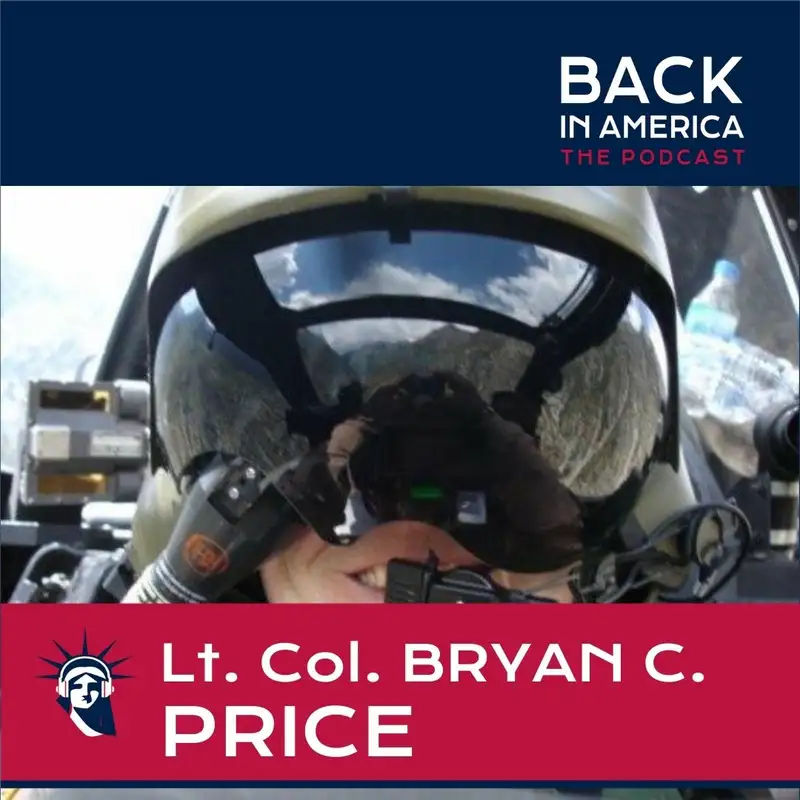
Welcome to Back in America, the podcast. Okay, I think we should be good. And I'm also recording here as a backup. So it's all good. I am Stan Bertolow and this is Back in America, a podcast where I explore the American's identity, culture and value. My guest today is a retired lieutenant colonel, a PhD and the founding executive director at the Buccino Leadership Institute at Seton Hall University.
He spent the first half of his 20-year army career in operational assignment as an Apache helicopter pilot, including combat deployment in Iraq and Afghanistan. From 2012 to 2018, he was an academy professor in the Department of Social Science and the director of the Combating Terrorism Center, CTC, at the US Military Academy. He is known for his public research on terrorism and counterterrorism. He holds a BS from the US Military Academy in US history, an MA in international religion from St. Mary's University in Texas, and an MA and a PhD in political science from Stanford University.
As the CTC director, he was invited to testify in front of Congress and frequently briefed the nation's top counterterrorism leaders. In 2019, he founded top mental game LLC, which provides professional coaching and mental skills training for elite high school, college and professional athletes. I am delighted to welcome Lieutenant Colonel Brian C. Price. Thanks Stan, thanks for having me. It's fantastic to be speaking with you, Brian, and I have the feeling that you may be in instrumental in my explorations of the American identity, culture and value.
So let's jump into it. Most Americans like sport and respect the troops, and you embody the two. In 2019, when you started top mental game, why did you choose to coach athletes? Sure, so I've been an athlete all my life. I grew up playing multiple sports as a kid. I played three sports in high school. I played football, basketball and baseball. And then when I went to West Point for college, I played Division 1 baseball there.
And so when I came back to teach at West Point in the second half of my military career, I was a faculty member, but I was also able to serve as an assistant coach on the baseball team there too. And they had this great place there called the Center for Enhanced Performance, which provided a lot of sports psychology concepts to the Division 1 teams. And I felt like it's a natural, it's one of my passions. Leadership is one of my passions, and sports is one of my passions. And starting top mental game was a way to kind of give back to both.
Yeah, you get the best of both worlds, right? I was wondering what kind of leadership skills you think that you learn in your military career that you teach today to your civilian clients? Sure.
So I think the best way to kind of sum it up in terms of what were the leadership skills that I learned in the military that now I am providing to the students at Seton Hall in the Puccino Leadership Institute, essentially it kind of boils down to how do you be the best servant leader that you can be? And servant leadership is about, I think the best kind of metaphor for it is in traditional kind of leadership studies in the past, like in the second half of the 20th century, you might think of a pyramid, right? Where the workers are at the bottom, the employees, and then middle management, and then up at
the top are senior leaders. And I think both the military and a couple of these other things that are other fields that work in leadership, the most effective leadership is actually servant leadership. And it's where you inverse that triangle upside down so that the senior leader is actually working when that person comes to work every morning, they're working for their employees, not the other way around. And I think leading by example is obviously a characteristic trait of effective leadership in the military.
And that's what we're trying to do with our students at Seton Hall. Let's go back to the beginning of your own career and maybe your own life. As I mentioned, you dedicated your life to this country. And I'm very curious to hear how or who made you want to join the army. How old were you when you decided that this was going to be your life? When I was a senior looking at different colleges, I wanted a place where I would be challenged. And I think that money was also a driving factor. And for those of you that don't know, you can go to the US Military Academy or the Naval
Academy or the Air Force Academy. And I don't want to call it free because you have to pay back the time you have to serve in the military for five or six years as an initial commitment. But I went on a bunch of different recruiting visits. The one place where I felt like home, like this was with me, was West Point and the US Military Academy. And I knew I was going to be challenged. I knew that I was not going to be a financial burden on my parents.
It was an opportunity to play Division I baseball. And as a kid, I didn't really know what I wanted to do in life. So I felt like, well, if someone's going to tell me what to do for the next six years after graduation, that would be... I was OK with that to see if I could find my way. And the ironic thing was, I thought I was going to get out of the military after my initial commitment. And the joke was on me because 20 years later, I was still in and I wouldn't regret it for
a second. What's your best memory from that time? It's interesting because I can say the same thing about sports or what I'm doing now. I think the best memories always relate around the people. In the military, you are obviously put in a crucible of several different moments where all of the veneer gets removed. And you are in a very stressful situation with people that you care deeply about. And so to me, it's those moments when you are facing incredible odds and unbelievable
adversity, but you're doing it with people that you care about. I could point to a ton of those moments. But those are the moments. And I can say the same thing about my experiences in sports or the academic world. And look, that's one of the reasons why it's well known that there's such a strong bond with the folks in the military. So people. Well, talking of people and talking of Westpont, as I prepared this interview, I went to the
website of the Academy and noticed that they had published a note regarding the current events. I wonder if you saw it. I did. I have. Yep. General Williams, that kind of made the rounds on the Internet amongst graduates. And yes, I have seen it. I have it in front of me. Good. Can I ask you to maybe share this letter or part of it with the audience? Interestingly, it starts out with USME, which is the acronym for the US Military Academy.
And it says USME teammates, which I think is very telling from a leadership perspective. It said, as you are aware, our country is experiencing civil unrest during these unsettling times. I want us to recommit to eradicating racism from within our ranks by treating all people with dignity and respect. We must show one another the kindness and compassion necessary to build cohesion and trust in our community. The oath to support and defend the Constitution binds us together as one team dedicated to defending our nation and upholding its values. We strive to embody these ideals and aspire to live by our core values of duty, honor and
country. Every word, every action and every attitude should uphold these values so that we may live and lead honorably. The nation looks to Westpoint as an example of what is possible when people from diverse backgrounds unite and aspire to honorable living. Consider how your words, actions and attitudes impact other people. Are you building up others and making them feel valued? Are you strengthening trust within the team? Are you extending forgiveness and actively listening to other points of view?
Are you inspiring others to greatness? If so, encourage others to do the same. If not, then choose to improve immediately. Muster the moral courage necessary to confront and solve problems with effective, honest and empathetic dialogue that seeks solutions rather than sowing seeds of division and disunity. I am proud to serve alongside you as we pursue excellence while respecting the dignity of our teammates. Together, let us show the nation that their trust in us is well placed. Very respectfully, General Daryl A. Williams.
Wow. Wow. So when I read those lines, I couldn't help but try to read between those lines. On one hand, it felt like sort of a fluffy, feel-good, patriotic statement. On the other, sentences such as consider how your words, action and attitude impact the other or muster the courage necessary to confront and solve problems with effective, honest and empathetic dialogue made me really wonder if we should look into this address as a message to the current administration.
What do you make of it? First off, I think the sentiment behind this reflects a lot of the military and specifically the officer corps that comes out of the US Military Academy. I think when you want to look at what Wright looks like in terms of race relations, about what as close to a meritocracy as you can kind of find, West Point is one of those places where we like to think that it is representative of the entire country. There are cadets from all 50 states. There are cadets from every walk of life.
We are not there yet when it comes to ethnicity or gender, but those are important metrics for the administration in order to get to. I think that it's almost like a microcosm of the country, to be honest with you. All those things about when he talks about living honorably and mustering the moral courage, those things are not, I will tell you, they're not fluff to those that are at the Academy just to give you one quick anecdote. Maybe you have heard of this or maybe not, but there is an honor code at West Point that cadets won't lie, cheat, or steal or tolerate those who do.
They are serious about that.
It's not just about living honorably, but if you see someone else behaving in a way that is antithetical, whether it's lying, cheating, or stealing, it's your duty to call that out. If you don't and you get caught and you knew about it beforehand, you also face consequences of potentially being removed from the Academy.
I thought it was a strong address by General Williams.
To my second point, do you think it's a message to the administration? Oh, I can say categorically, this message was not directed externally, it was directed internally.
By no means was this directed out by any means.
Could the administration apply some of this and maybe do it? I would concur with that. Not just the administration, I think any American or any corporation or any organization in the United States can benefit from that type of message and that type of sentiment for sure. Okay. Well, I once again want to ask the man of the military here, James Mattis, the former defense secretary, described Trump's as a threat to the Constitution and he wrote that Donald Trump is the first president in my lifetime who does not try to unite the American people. He does not even pretend to try. Instead, he tries to divide us.
So as a military man, as a leadership expert, as a strategist, what is Trump doing? Yeah, so this is one where I know the military is kind of conflicted in this. First, let me state that I have the utmost respect for General Mattis and what he's done. His career, I think, has proven that he is a true warrior scholar and well respected by almost—I don't know anybody that doesn't respect General Mattis in the military, to put it that way. There is a long line of in the military, even dating back to pre-World War II times, of it trying to be as apolitical of an entity as possible. So you will not find—like in other countries, you will see the military
dabble in politics or try to do stuff behind the scenes. And in the military, at least in the US military, there is an ethic where there is the commander in chief and there is the commander in chief and there is civilian rule of the military and that's respected. Afterwards, once you retire, it's interesting to see general officers—and this is a trend that I know a lot of my colleagues have written on about—of what is the role of former general officers after they retire when it comes to getting involved in politics and making comments. This is what I'll say about General Mattis. His military credentials are impeccable. He served in the administration, so he has a front row view of what went on. Now, again, how you feel about General Mattis'
comments probably will split along partisan lines. What I will tell you is that I have no reason to doubt any of his words when it comes to his credibility. So what kind of strategy is Trump playing? I think right now, obviously, this is a difficult time for any administration when it comes to the civil unrest that we're facing, the pandemic that's going on, what's happened to the economy, and our country is deeply hurting. And then on top of all that, you have a re-election coming up. So, look, when it comes to a strategy for all this, I think I would be hard-pressed to say that we have a strategy at this point for solving all those things. It'll be interesting to see what
comes out in this election to see if whoever is going to be the next president—whether it's going to be President Trump for a second term or Vice President Biden is the new president—whether or not they have a solution to solve some of this stuff. Joe Biden predicted that a military will escort Donald Trump from the White House should the president lose in November and refuse to leave office. Is that even possible? Do you see the Army stepping in and doing that? The military, even though the president is the commander-in-chief in terms of formal authority, we swear an oath as officers when we take the oath every time that we are promoted.
And when you get in the military, you swear an oath not to the president. You swear an oath to defend and support the Constitution of the United States. And so, in this case, if the people vote in President Biden to be the president, then there should be a peaceful transition of power. So what you're saying is that if it is not the case, the military will honor their oath to the Constitution and will step in to make sure the Constitution is respected. Has that ever happened in history? No, not that I know of in terms of presidents leaving. A president has lost an election and
has had to be forcibly removed from the White House. Knowing Trump, do you think that would be feasible?
He's full of surprises. I would hope that President Trump would understand the impact that move would have on the country moving forward. But he has been known to surprise us before, and so I hope that is not one surprise that he has left up his sleeve. I hope the process works itself out and it's respected by candidates. So we mentioned the civilian rest, and I'm wondering how you, as a white American man, what you've personally learned from the conversation that this country has had about race and inequality?
This is interesting. I've had obviously a lot of different conversations with people since the unrest started. And I'll say this, the two biggest places that have shaped my own personal race relations are two mediums. One is the sports world, and the second is the military.
I think this probably gets to when you're trying to aspire to achieve some larger goal bigger than yourself, and you are in those moments I talked earlier about, about adversity and having that veneer stripped away. Race doesn't matter in those moments. Religion, ethnicity, sexuality doesn't matter in those moments. And so it's been really painful to watch what's happened in this country in the past month. I'm a white male. When you look at the advantages that I've had over my lifetime and you ask yourself, is my success or the things that I have achieved, how much of that has been based off of this system that has been built? On the flip side, you ask yourself, well, how do we make that system better so that we are more equal and aspiring to
those goals that our forefathers kind of talked about in terms of making this place where all men are created equal? We can obviously add women to that now. So it pains me. I think what I have learned personally in this whole thing, I don't think that the average American, particularly the average white person, has a very good understanding of what it's like to grow up in this country as a minority. In this case, we'll just talk about Black Americans. I certainly don't have any clue of what that would be like. I've listened to previous episodes, and I know that you've had other people on here that have shared that experience, and it's been kind of eye-opening to me. On the flip side, I would say that I also think that the average American has zero clue
about the pressures and the adversity that an inner-city cop has to go through on a daily basis.
I was telling somebody the other day, it's very easy to get outraged these days. Pick your poison. I'll use the terminology of the far right. If you want to take a look at anarchists and looters and violent protesters doing horrific things and acting horribly in a violent way—I'm not talking about the nonviolent protesters—then go flick on Fox News. You will probably see one or two clips that even if you are on the left, you look at it and you go, oh my gosh, this is horrible. Equally, if you want to look at the greatest hits album of police brutality and police doing horrific things to what you believe is ostensibly peaceful protesters, well, then go click on CNN or another venue. I don't think that we're getting the whole picture here.
To me, unless we get the folks that can articulate what that is like to be a Black American living in this country in this day and age, and the folks that are on the front lines in law enforcement and articulating what they have to go through, we got to get those two sides in a room and come up with a better solution. The last thing I'll say is I get asked a lot because I'm in the military this question of kneeling and the flag. I was always brought up and raised of the flag represented the best of our country, patriotism, all of the values and ethos that goes into being an American, not to mention that it is a reflection of those that have fought for our country in the past and those that have paid the ultimate sacrifice, the last full measure of devotion, as President Lincoln
said. If I am a young Black American in this country and I've experienced racism and bigotry and prejudice and all those things that are not what we are about as a country, when that person looks at the flag they might see something very very different, and I think it's important to have that conversation of what that looks like. In the end I'm an eternal optimist when it comes to this country. I've learned a lot and I've tried to do way more listening during this episode than speaking. I don't know if everyone is taking the same advice. And do you think that these protests will lead to structural changes or that they will slowly die out and the things will continue the way they were before? I don't know. I'm 44. Just looking at
like this compared to previous things it feels different. How do you think they are different? You know and you are an historian. So I'll just give you a couple of anecdotes which if you told me in 2019 that this would happen a year later I would have told you I can't foresee that. If I would have told you that NASCAR was going to ban the Confederate flag at their events a year ago, you would have thought I was crazy. I spent a lot of time in the south. There's a lot of military bases in the south. I spent a lot of time in the Sunbelt and in the south. Obviously NASCAR is big down there. I'm very surprised by that. Secondly, I don't know if you've recently seen but the Marines have come out and have banned the use of the Confederate flag on any installation in barracks,
on cars, in offices. Again these are all kind of really interesting moves that I don't think would have happened without these protests and without the outrage that occurred after George Floyd. Now let me say this. Where does the pendulum end with some of these things?
I don't have any heartburn at all about removing Confederate general statues in town squares and that sort of thing. If you ask me about Gettysburg I think they should remain at Gettysburg because it's a national battlefield, it's a national monument and that's the kind of place for those sorts of things. But on the statue question I have zero heartburn with that stuff being removed. All of those things I would tell you are good things. When you start talking about
the more extreme versions of some of these things, like defund the police is obviously a very prominent subject. Again I go back to my notion that I don't think any, you know, most of us have zero clue what it takes to be a police officer in the inner cities. And so this notion that we're going to either remove police or completely change, and I'm sorry not change, but remove that system of law enforcement and replace it with community activities, to be honest I think is also a pipe dream. Do we need reform? 100 billion percent. But this gets back to my notion of like those two sides need to kind of get into this room. So that's for those reasons I think that this is different from previous ones. Reform and training maybe? Yeah,
100 percent. You know again, you know it's funny to look at some of the police forces that are in suburbia being outfitted with equipment that we were using in Iraq. What type of message is that sent to folks? But look there are some places where the violence is at such a level where the police do need extra protection and I'm all for that. I think both sides could benefit from a little reform in this situation. Early on you talked about the values which the flag represents. What are those values? So I mean it kind of bleeds into the question of like what is America, right? And you know I have a separate answer for that but just to answer your specific question, you know it's things like freedom, opportunity, equality. I would also add kind of meritocracy
to that. And again these are all, when I say they're aspirational values, they are ideals that we strive for. I'm not saying that we are there yet. I don't know if we'll ever be there yet. Those are the things that I think what America stands for. And you know I talked earlier about you can flick on the news and pick your poison. Whatever you want to be outraged about you can go find it. Look there's a ton of stories out there of Americans doing fantastic things that are not being amplified. And you know it's funny if you ever go to my social media feeds, you know I used to be kind of a snarky. And so where should we find you? I mean I'm on Facebook at Brian Price. If you want my business stuff you can go take a look at, I think on Instagram,
Twitter, and where else? You can go to Top Mental Game. But if you want to go to like my personal stuff it's at you know Brian Price. And on Twitter it's Brian Price 7. I used to be kind of snarky and you know I have a dry sense of humor so I would kind of poke fun at stuff. And about six years ago, five years ago, I was like man there's so much negativity on social media right now. And so I made a conscious decision to change up how I, what did I put out there to the world. And I started a thing it's called, I just call it sports. So I find these fantastic like tear jerking like emotional people stories about sports like that represent the best of us, like the best values that we want. Taking care of each other, sacrificing for others, you know sacrificing for
your teammates, choosing the harder right over the easier wrong, which isn't the cadet prayer by the way. And I would just write sports dot dot dot and I would just leave it there. And a cool thing happened because there was like a little mini movement that has taken place where other people will now send me things that say hey Brian sports and it's a clip of a story or a video and it's like man we need more of that. You know we need more of that stuff populating our social media feeds. And I'm not saying that we need to stick our heads in the sand and you know be Pollyanna about what's going on in the world. But again if all you do is watch you know the news on whatever favorite news channel you have, you're going to be a pretty negative miserable person.
And there's a big world out there. I hear you. And karma right? You send good stuff to you. I hope. Yeah and you allude to that early on. I would love to know what America is to you.
All right are you ready? I'm ready. All right so when I thought about this question obviously there's a number of different ways you can take it and a lot of your guests have you know chosen various aspects of it. But when I sat down and I thought about this I wrote this and you know I think what is even better is a poem that I'm going to share with you which you may have heard before but maybe not. And so when I think of what what America means to me I wrote it's the greatest experiment the world has ever known. Where we are chasing an ideal that we may never achieve but it's an ideal that is worth fighting for and worth dying for. So here's my poem. It's by Langston Hughes which I'm not sure if you've ever heard of him but he was a black American in the
you know early half of the 20th century. And this poem I definitely recommend you look up the whole thing. I'm not going to read all of it just for time purposes but it was written in 1936. Okay so it's not it's not recent but I think it's telling and it kind of puts in poetry form what I just shared with you. So I'm going to read a couple snippets. Let America be America again. Let it be the dream it used to be. Let it be the pioneer on the plane seeking a home where he himself is free. America never was America to me. Let America be the dream the dreamers dreamed. Let it be that great strong land of love where never kings connive nor tyrants scheme that any man be crushed by any above. It never was America to me. Oh let America be America again
the land that never has been yet and yet must be the land where every man is free. The land that's mine. The poor man's Indians, Negroes, me. Who made America? Whose sweat and blood, whose faith and pain, whose hand at the foundry, whose plow in the rain must bring back our mighty dream again. Sure call me any ugly name you choose. The steel of freedom does not stain. From those who live like leeches on the people's lives we must take back our land again. America. Oh yes I say it plain. America never was America to me and yet I swear this oath America will be.
Wow very very timely. It's when you read the whole poem
it it speaks to that the fact that everybody has bought into this American dream.
And everybody's willing to fight for that dream but that dream isn't a reality. And there's a lot of people that you know feel that that dream is hypocritical or not serving them and are upset. If we're not there yet it's still a worthwhile fight to try to get there. And so like to me that's a real it's not a like a warm and fuzzy patriotic poem but it's also not a you know to me it's like it's it's the best articulation of what I was trying to say in my in my faulty words but Langston Hughes is a better way of saying it. Yeah okay thank you thank you for sharing that. Would you have any books or movie that our audience should read or watch? So in terms of the books and I think I shared this with you beforehand you're like the modern day
Alex de Tocqueville from France and his great book Democracy in America. So that might be an interesting book to kind of to go through. He was trying to understand America and American culture you know many many moons ago and now you're trying to kind of do the same thing so I thought that was interesting. For those that might want to know a little bit about that meritocracy that I was talking about at West Point and the microcosm of the country there's a great book called Absolutely American by David Lipsky which again paints a pretty realistic both good and bad of what life is like up there and then from Ron Chernow's autobiography on George Washington is pretty amazing called Washington on a life and so that's another book that I would definitely recommend. A
movie that represents the best of us in America there's a couple out there if you want a military movie that talks about kind of the greatest generation and what that was like I think Saving Private Ryan is probably a really good start by Steven Spielberg. Okay great thank you Brian thank you so much for your time thank you for sharing all this with us today. Awesome thanks Dan appreciate it. Thanks. Can I share with you a quick story about George Washington but to me it kind of speaks to a lot of the craziness that's going on and when you talk about true leadership this is definitely it. After the Americans had this great victory against the British and the war was essentially over talking about Yorktown I think a lot of people thought the war was over
and that the Americans had won and yet we were on very tenuous ground at that point and so fast forward to you know two years to 1783 Washington was actually based just north of West Point actually in a place called Newburgh New York. At this time our government you know was essentially dysfunctional they could not pay the soldiers because the Articles of Confederation banned taxing on the people and so there was no real money they had promised to pay veterans of the war a half wage and that had never occurred and on top of that you had reportedly a third of the Washington's forces did not have shoes and so you know here we are about to take down at the time you know the world's one of the superpowers represent France and so we're at this this big
moment and Washington catches wind that there were senior leaders in his outfit were circulating a letter to organize essentially what was a military coup to go down to Philadelphia to take over the government and demand that they get paid and you know they get clothed and you know treated with respect and at the time you can imagine like after you know fighting for you know at that time seven years or so there was a lot of support for the soldiers who had left their families and and were and fought for this country and that were not being treated properly and so there was a lot of ground well support for it but Washington catches wind of this and he's old in age and so he calls for all officers to to meet in this evening and he
comes in he wants to read a letter that he was talking to somebody about and so he he's kind of fumbling with the letter he can't read it because of his eyesight and he he puts on his his bifocals and he says gentlemen you must now pardon me for i have not only grown gray but almost blind in service to my country and then he goes on to talk about essentially i'm paraphrasing Washington at this point like we didn't fight this war we didn't do all this stuff for this great experiment of America to go back to what would have happened in Europe to go back to a military dictatorship or military rule of government that if this whole thing is going to work at this troubled time we need to respect the civilian rule of authority and that that's what makes this whole experiment
different i don't know if anybody else other than Washington could have made that happen at that point because he was so respected he was obviously a military general he did come from aristocracy but he could relate to you know the common man and when i look at what our country you know i was in Iraq and Afghanistan and when i see these people get put in power of young democracies that poll for centralization that poll to centralize power and to and to become corrupt are so overwhelming that like it's failed in both of those countries you know this we can't just take this experiment and outsource it like we thought we could and yet here we are in America and we had that leader at that time make that decision
and i wonder if where we would be today if that decision wasn't made
so
um
Where do you go? I'm a silent, you want to know Inconsistent
Ask your questions, ask them to the wise one.
Ask your questions, ask them to the wise one.
Ask your questions, ask them to the wise one.